Christian Be Bold Be Brave Scripture: A Strategic Anchor for Purpose-Driven Action
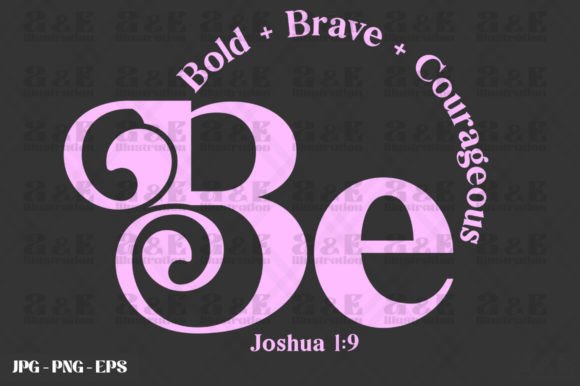
“Be strong and courageous. Do not be afraid; do not be dismayed, for the Lord your God will be with you wherever you go.” — Joshua 1:9 (NIV)
This verse—and others like it—forms the spiritual and practical core of what many now refer to as Christian Be Bold Be Brave Scripture. It is not a standalone slogan or decorative phrase. It is a distilled theological principle rooted in covenantal assurance, divine presence, and obedient initiative. For professionals navigating uncertainty—whether launching a service-based business, leading a team through change, publishing content in a polarized digital space, or redesigning curriculum for deeper student engagement—Christian Be Bold Be Brave Scripture functions best when treated as a decision filter, not just inspiration.
Why This Scripture Resonates Strategically—Not Just Spiritually
At first glance, “be bold, be brave” sounds motivational. But its strategic power lies in how it reframes risk. In business strategy, risk is rarely about recklessness—it’s about asymmetric upside constrained by clarity of purpose and alignment with enduring values. Christian Be Bold Be Brave Scripture does not encourage impulsive action. It invites calibrated courage: action grounded in trust, tested by reflection, and oriented toward stewardship—not self-promotion or short-term gain.
Consider a freelance educator designing online courses on ethical leadership. She could choose the safest path—repackaging existing content—or she could restructure her entire curriculum around biblical models of courageous integrity, citing specific passages like 1 Samuel 12:23 (“As for me, far be it from me that I should sin against the Lord by failing to pray for you”) as a framework for accountability in leadership development. That choice isn’t merely stylistic—it’s positioning. It signals depth, consistency, and a worldview that shapes methodology—not just messaging.
How to Use Christian Be Bold Be Brave Scripture Intentionally
Intentional use begins with asking three questions before applying the phrase:
- What outcome am I stewarding? (e.g., building trust with a niche audience, clarifying organizational values, sustaining long-term creative output)
- What assumption am I challenging? (e.g., that visibility requires compromise, that leadership must mimic secular models, that growth demands constant scaling)
- What boundary does this scripture help me hold? (e.g., declining projects misaligned with integrity, pausing content creation during seasons of discernment, prioritizing relational fidelity over metrics)
When used this way, Christian Be Bold Be Brave Scripture becomes part of a feedback loop—not a one-time declaration. A small business owner might print the phrase on internal onboarding materials—not as decoration, but as an explicit reminder that operational decisions (e.g., vendor selection, client boundaries, pricing structure) are expressions of conviction, not just convenience.
Design Considerations: Beyond Aesthetics
The graphic files you’ll receive—a PNG (300 dpi), PDF, JPEG, and SVG—are tools for implementation, not endpoints. Because they are unlayered, they invite thoughtful integration rather than passive placement. An SVG file, for instance, can be embedded directly into a website’s code and styled responsively—ensuring the phrase appears with consistent weight across devices without loading unnecessary assets. A high-resolution PNG works well for printed workshop handouts where tactile credibility matters. The PDF serves best for internal team briefings where version control and readability across platforms are priorities.
But design utility depends on context. Slapping Christian Be Bold Be Brave Scripture onto a homepage banner without anchoring it to mission-aligned copy dilutes its resonance. Instead, pair it with a concise statement of practice: “We respond to market shifts with prayerful agility—not reactive pivots.” That combination transforms the phrase from ornament into orientation.
When This Scripture Adds Real Value—and When It Doesn’t
It adds value when it supports coherence: aligning voice, offer, operations, and outreach under a shared interpretive lens. A nonprofit communications director using Christian Be Bold Be Brave Scripture might revise donor appeals to emphasize faithful stewardship over urgent scarcity—shifting tone from desperation to dignity. That subtle recalibration often increases retention and lifetime value more than aggressive fundraising tactics.
It loses value when used as a substitute for strategy. Saying “we’re bold and brave” while maintaining outdated workflows, inconsistent brand voice, or unclear service definitions creates dissonance—not differentiation. Worse, it risks spiritual bypassing: invoking divine authority to avoid hard operational work or honest self-assessment.
Similarly, deploying the phrase without cultural awareness can backfire. In global or multi-denominational contexts, assumptions about shared scriptural interpretation may not hold. A marketer serving diverse Christian communities would test whether “bold and brave” resonates equally across traditions—or whether terms like “faithful resolve,” “steadfast witness,” or “covenantal courage” land with greater precision.
Practical Integration Across Functions
Here’s how Christian Be Bold Be Brave Scripture operates in real-world roles—without abstraction:
- For creators and bloggers: It informs editorial calendars—not by dictating topics, but by guiding emphasis. A post on negotiation skills might foreground Proverbs 31:8–9 (“Speak up for those who cannot speak for themselves”) rather than tactical leverage alone.
- For educators and trainers: It shapes assessment design. Instead of measuring only knowledge recall, a course might include reflective prompts asking learners to identify one area where they’re practicing courageous obedience—not perfection.
- For small business owners: It informs hiring criteria. A candidate’s ability to articulate how their faith informs professional boundaries or conflict resolution may carry more weight than polished interview answers.
- For freelancers and consultants: It strengthens proposals. Rather than leading with features, a proposal might open with how the client’s stated challenge invites a response rooted in steadfastness—not speed.
Risks of Untethered Use—and How to Mitigate Them
The greatest risk isn’t misuse—it’s misalignment. Using Christian Be Bold Be Brave Scripture without defining what “bold” and “brave” mean *in your specific context* leads to inconsistency. One team member interprets “bold” as speaking first in meetings; another sees it as initiating difficult conversations about equity. Without shared definition, the phrase fragments rather than unifies.
Mitigation starts with documentation. Draft a one-paragraph internal guide: “In our work, ‘bold’ means [concrete behavior], and ‘brave’ means [observable action]. We demonstrate this when we [example], not when we [counterexample].” Revisit it quarterly—not as dogma, but as a living standard tied to outcomes you measure: team psychological safety scores, client renewal rates, time-to-decision metrics on ethical dilemmas.
Another risk is exhaustion masquerading as faithfulness. “Being brave” shouldn’t mean ignoring burnout signals or refusing delegation. True courage includes knowing when to rest, recalibrate, or release control—just as Elijah did in 1 Kings 19, where God met him not in the wind or fire, but in the “gentle whisper.” A sustainable practice of Christian Be Bold Be Brave Scripture honors rhythm, not just rupture.
Long-Term Positioning: Beyond the Momentary Lift
Marketers know slogans fade. What endures is coherence—the cumulative impression of reliability, depth, and intentionality. Christian Be Bold Be Brave Scripture, applied consistently across touchpoints, contributes to that impression not because it’s repeated, but because it’s reflected—in how decisions are made, how setbacks are framed, how success is defined.
A publisher who uses the phrase while also implementing transparent royalty structures, honoring contributor copyrights without exception, and publicly correcting errors—demonstrates courage as operational discipline, not rhetoric. That builds authority far more effectively than any social media graphic.
So treat the included design files not as finished assets—but as starting points for disciplined application. Print them where your team makes decisions. Embed them where your audience forms first impressions. Reference them when evaluating whether a new opportunity expands your mission—or merely inflates your activity.
Because in the end, Christian Be Bold Be Brave Scripture isn’t about being seen. It’s about being shaped—so that your work, however modest, carries the quiet confidence of something anchored beyond trend, metric, or moment.