All I Need Is Jesus Video Games: A Strategic Creative Asset for Purpose-Driven Creators
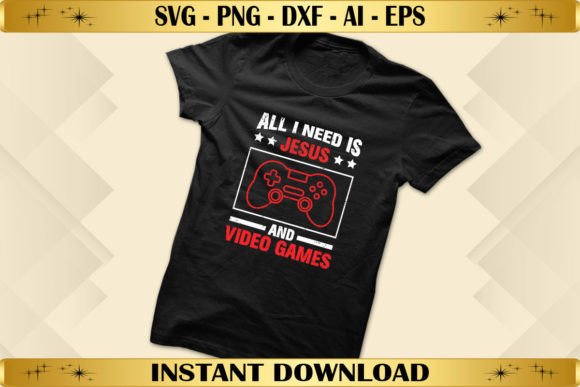
“All I Need Is Jesus Video Games” isn’t a literal gaming platform—it’s a purpose-built, faith-centered design concept repurposed as a versatile creative asset. At its core, it’s a high-resolution, multi-format digital file suite (SVG, PNG, DXF, AI, EPS) designed for intentional use across physical and digital touchpoints. Its value lies not in novelty, but in clarity of intent: it bridges spiritual conviction with practical execution—especially for creators who prioritize meaning alongside method.
Why This Design Resonates Beyond Aesthetics
For entrepreneurs, educators, small business owners, and content creators, visual language is rarely neutral. It signals values, shapes perception, and reinforces consistency. “All I Need Is Jesus Video Games” functions as a thematic anchor—a compact, recognizable phrase rendered in clean, scalable vector form. Unlike generic religious clipart, this design carries narrative weight: it implies simplicity, focus, and intentionality in the face of complexity. That makes it useful—not as decoration, but as a strategic communication tool.
Consider how it operates in context: a homeschool co-op leader uses the SVG to label weekly devotionals; a Christian podcast host embeds the PNG in episode thumbnails to reinforce brand ethos; a boutique print shop offers it as a customizable option on faith-based apparel. In each case, the design doesn’t stand alone—it supports an existing goal: clarity of message, reinforcement of identity, or alignment with audience expectations.
Strategic Use Cases—Not Just Decoration
When deployed deliberately, “All I Need Is Jesus Video Games” serves functional roles far beyond wall art:
- Branding consistency: The AI and EPS files allow seamless integration into logos, letterheads, or packaging—ensuring typographic integrity and color fidelity across print and digital channels.
- Educational scaffolding: Teachers and curriculum designers use the DXF file with cutting machines to create tactile learning tools—flashcards, puzzle pieces, or classroom signage—that reinforce scriptural themes through repetition and interaction.
- Customer experience signaling: Small business owners in faith-aligned niches (e.g., Christian counseling practices, ministry coaching services) place the SVG on welcome screens, intake forms, or email footers—not as proselytization, but as quiet, consistent alignment with shared values.
- Creative iteration: Freelancers and designers treat the source files as editable foundations—adjusting spacing, layering text, or adapting layout to match specific campaign goals without starting from scratch.
What matters isn’t the phrase itself, but how it’s embedded within a larger system of decisions. It gains power when paired with thoughtful copy, appropriate placement, and audience awareness—not when dropped in isolation.
Planning Your Implementation—Timing, Context, and Fit
There’s no universal “right time” to use “All I Need Is Jesus Video Games.” Timing depends entirely on your current objectives. Ask yourself:
- Is there a recurring communication gap where clarity of spiritual priority would strengthen trust? (e.g., clients questioning your motivations, students needing grounding in values-based learning)
- Are you building or refining a visual identity—and does this phrase reflect a non-negotiable pillar of your mission?
- Do you have a channel or product line where users expect thematic cohesion? (e.g., a devotional planner, a youth group T-shirt series, a church resource hub)
If the answer to any is yes, then the file suite becomes infrastructure—not flair. But if you’re selecting it because it’s trending, or because “faith-themed” feels like a checkbox, pause. Without alignment to real-world goals, even the cleanest SVG risks diluting your message rather than deepening it.
What to Consider Before You Download and Print
The zip folder delivers five formats—but format variety doesn’t equal automatic utility. Before printing or embedding, assess these three dimensions:
1. Audience Receptivity
This phrase assumes familiarity with both Christian vernacular and contemporary cultural framing (“Video Games” as metaphor, not medium). It resonates strongly with younger believers and those comfortable with playful theological language—but may confuse or alienate audiences unfamiliar with that register. Test it in low-stakes settings first: a social media story, a newsletter header, or internal team materials.
2. Technical Readiness
SVG and AI files require compatible software (e.g., Illustrator, Inkscape, Cricut Design Space) for editing. PNG works universally but isn’t scalable. DXF suits laser cutters and CNC machines—but only if you’ve calibrated your machine’s import settings. Don’t assume “download and print” means “plug and play.” Audit your tools and skills first.
3. Contextual Integrity
Placing “All I Need Is Jesus Video Games” on a coffee mug feels different than placing it on a trauma-informed counseling brochure. The same file, different weight. Consider tone, setting, and expectation. Does the phrase deepen understanding—or distract from the primary action you want the user to take? If the latter, simplify or substitute.
Risks of Using It Without Strategy
Unintentional use introduces subtle but measurable friction:
- Messaging drift: When repeated without anchoring to behavior or explanation, the phrase can become hollow—resembling slogan over substance. Over time, audiences may associate it with surface-level religiosity rather than lived conviction.
- Brand fragmentation: Dropping the design into unrelated projects (e.g., using the same SVG on a financial literacy workshop slide and a worship playlist graphic) blurs your positioning. Consistency requires curation—not volume.
- Operational inefficiency: Editing unstructured files repeatedly wastes time. If you lack a style guide or usage framework, you’ll spend more hours adjusting kerning or re-exporting than advancing your actual objective.
None of these outcomes stem from the file itself—they result from decoupling the asset from decision-making discipline.
How to Use It Intentionally—A Practical Framework
Start small. Choose one use case aligned with an immediate goal—and apply this three-step filter:
- Define the outcome: What change do you want to see? (e.g., “Parents recognize our curriculum’s values-driven approach within 5 seconds of landing on the homepage.”)
- Select the format deliberately: For web headers, use SVG for crisp rendering at any size. For heat-transfer vinyl, use DXF for precision cutting. Match format to function.
- Measure resonance, not just reach: Track engagement metrics (time on page, click-through on related resources, follow-up questions), not just downloads or impressions. Did the phrase prompt deeper interaction—or passive scrolling?
Iterate based on evidence—not assumptions. One well-placed, well-contextualized instance of “All I Need Is Jesus Video Games” often outperforms ten scattered ones.
Long-Term Value Lies in Integration, Not Isolation
The most enduring benefit of this file suite isn’t in the ZIP folder—it’s in how it fits within your broader system of creation. Over months, it can become part of a repeatable workflow: a trusted element in your visual vocabulary, like a signature font or a standard color palette. But that only happens when you treat it as infrastructure—not ornament.
That means documenting where and why you used it. Saving edited versions with clear naming conventions (e.g., “AllINeedIsJesus_VideoGames_WebHeader_SerifVersion”). Updating usage guidelines as your audience evolves. And—critically—retiring it when it no longer serves your current priorities.
Because ultimately, “All I Need Is Jesus Video Games” works best when it reflects something true about your practice: that clarity of purpose enables better decisions, sharper communication, and more sustainable output. Not because the phrase is magical—but because choosing it thoughtfully says something meaningful about how you lead, teach, build, and serve.