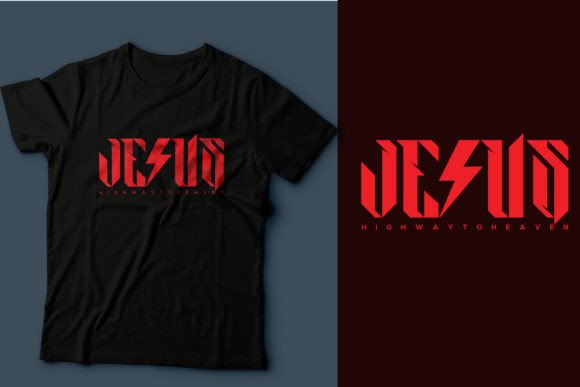
Jesus Highway to Heaven: A Typography-Driven Faith Statement on Apparel
“Jesus Highway to Heaven” is a concise, typographic design concept centered on the Christian belief in salvation through Jesus Christ. Unlike illustrated gospel scenes or symbolic motifs—such as doves, crosses, or stained-glass patterns—it communicates its message primarily through carefully arranged, intentional typography. The phrase itself functions both as declaration and directional metaphor: “highway” evokes Isaiah 40:3 (“a highway for our God”) and John 14:6 (“I am the way”), while “to Heaven” affirms eschatological hope. Its strength lies not in ornamentation but in clarity, reverence, and visual economy.
What Makes This Design Distinct From Other Faith-Based Apparel?
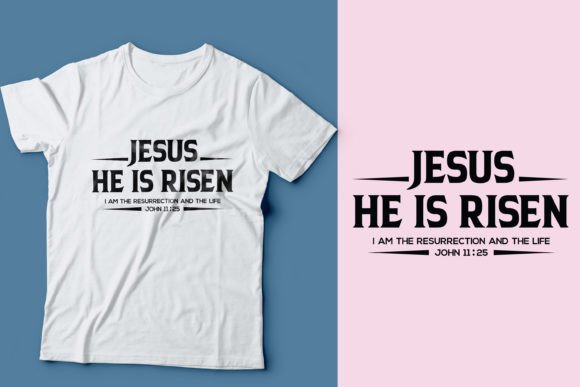
Most religious t-shirts fall into one of three broad categories: illustrative (featuring artwork or icons), devotional (scripture quotes or prayers), or declarative (short phrases like “God is Love” or “Saved”). Jesus Highway to Heaven sits firmly in the declarative category—but with a typographic emphasis that sets it apart. It avoids stylized fonts meant to evoke antiquity or mysticism. Instead, many versions use clean, legible, often sans-serif or subtly serifed typefaces—designed for readability at a glance and longevity in print. The focus remains on the words themselves, not decorative embellishment.
This approach resonates with adults who value theological precision and visual restraint. For someone who finds ornate religious imagery distracting—or who prefers apparel that invites conversation without appearing overtly proselytizing—the Jesus Highway to Heaven design offers a middle path: unmistakably Christian, yet grounded in language rather than iconography.
How the Vector File Package Supports Practical Use
The availability of 100 vector files—in CMYK color mode, EPS 10 format, plus SVG and PNG—addresses real-world production needs. CMYK ensures accurate color reproduction for professional screen printing or direct-to-garment workflows. EPS 10 compatibility means full editability in Adobe Illustrator and similar tools: individual letters can be repositioned, spacing adjusted, colors changed without quality loss, and elements isolated for multi-color separations.
Compare this to raster-based downloads (e.g., high-res JPGs or PNGs). Those work fine for digital display or small-batch heat transfers—but scaling beyond original dimensions introduces pixelation, and color adjustments are limited to global filters. With vectors, you retain control: swap navy blue for burgundy, add a subtle outline, or adapt the layout for a pocket-sized chest print versus a full-back statement. That flexibility matters whether you’re ordering 20 shirts for a small group or preparing assets for a local print shop handling hundreds.
When This Design Fits Well—and When It Might Not
Jesus Highway to Heaven works best when the goal is quiet confidence rather than loud proclamation. It suits contexts where tone and context matter: campus ministry staff wearing coordinated tees, volunteers at community outreach events, or individuals seeking apparel that reflects conviction without confrontation. Its typography-first nature also lends itself well to minimalist wardrobes—pairing naturally with neutral tones and clean silhouettes.
It may be less suitable if your priority is immediate visual recognition across distance (e.g., large-group visibility at a rally) or emotional resonance through symbolism. A cross or fish symbol communicates instantly to broader audiences—including those unfamiliar with English—and carries centuries of layered meaning. In contrast, Jesus Highway to Heaven assumes baseline literacy and some familiarity with biblical language. That’s not a flaw—it’s a design decision aligned with a specific communicative intent.
Typography Choices Matter More Than You Might Expect
Not all “Jesus Highway to Heaven” designs are equal. Subtle differences in kerning, weight contrast, line height, and capitalization significantly affect tone. A tightly tracked, all-caps version feels assertive and modern; one with generous letter spacing and mixed case reads more contemplative. Some versions place “Highway” in bold and “to Heaven” in lighter weight—emphasizing journey over destination. Others treat the phrase as a single rhythmic unit.
This is where the included vector files become especially valuable. Because each element is editable, you’re not locked into a single interpretation. You can test variations: try a serif font for gravitas, switch to a geometric sans for contemporary appeal, or adjust hierarchy to highlight “Jesus” as subject rather than “Heaven” as goal. That level of adaptability supports thoughtful, audience-aware customization—not just personal preference.
Realistic Use Cases Across Contexts
- Youth group leaders choosing apparel for service trips may prefer Jesus Highway to Heaven because it avoids infantilizing visuals while still affirming core belief—making it age-appropriate for teens and young adults alike.
- Small church plant teams often need cohesive branding across multiple touchpoints. Having editable vector files means the same phrase can appear on t-shirts, event banners, and digital slides—with consistent typography and color matching.
- Individuals navigating faith in secular workplaces sometimes opt for understated expressions of belief. A well-set, monochrome Jesus Highway to Heaven tee reads as intentional and composed—not performative.
Understanding Tradeoffs in Format and Application
Vector files offer precision, but they require basic familiarity with design software to modify effectively. If your only tool is Canva or a basic online t-shirt builder, EPS files won’t open natively—you’d need to convert them first or rely on pre-made PNG/SVG variants. That’s not a limitation of the files themselves, but a practical consideration in your workflow.
Likewise, while CMYK is essential for commercial printing, it’s unnecessary for home inkjet use or social media graphics—where RGB is standard. The package includes both formats for good reason: it anticipates diverse end uses, not just one-size-fits-all output.
Also worth noting: typography-only designs depend heavily on garment quality and print execution. A poorly aligned screen print or low-thread-count fabric can undermine even the most carefully considered type treatment. That’s why pairing these vectors with reputable printers—and reviewing physical proofs when possible—remains advisable.
Who Benefits Most From This Resource?
This collection serves people who see apparel as part of faithful witness—not just merchandise. It suits those who value craftsmanship in communication: choosing words deliberately, setting them thoughtfully, and reproducing them reliably. It’s for organizers who need scalability without sacrificing nuance, designers who want editable foundations rather than static images, and individuals who prefer statements rooted in scripture’s language over abstract representations.
It’s less ideal for those seeking novelty, trend-driven aesthetics, or ready-to-wear convenience without any customization step. If you want a shirt “as-is” from a marketplace listing and never plan to adjust color or layout, pre-printed options may be simpler. But if you anticipate needing flexibility across sizes, colors, garments, or future iterations, the vector package provides lasting utility.
Making an Informed Choice
Deciding whether Jesus Highway to Heaven fits your needs comes down to alignment—not just with theology, but with practical goals. Ask yourself: Is clarity of message more important than visual symbolism in this context? Do I need to adapt this across multiple applications or color schemes? Will others be involved in production or design decisions? How much control do I want over final output?
There’s no universal “best” faith-based apparel design—only what fits your purpose, audience, and process. Jesus Highway to Heaven stands out for its linguistic focus, typographic integrity, and production-ready file structure. When those qualities match your priorities, it becomes more than a phrase on fabric. It becomes a tool for consistent, adaptable, and reverent expression.