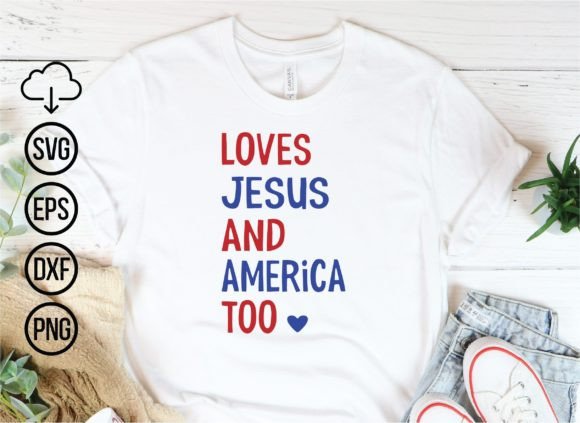
Loves Jesus and America Too, 4th July
If you’ve ever stood at a craft table with fabric scraps in one hand and a half-printed invitation in the other—wondering how to honor both faith and freedom without compromising either—you’re not alone. Loves Jesus and America Too, 4th July isn’t just a phrase—it’s a versatile, heartfelt design concept built for real-life moments where patriotism and personal belief intersect meaningfully.
What It Is (and What It’s Not)
This design centers on warm, inclusive visual storytelling: think stars-and-stripes motifs softened with gentle crosses, vintage typography paired with subtle dove silhouettes, or red-white-and-blue palettes balanced with earthy golds and soft creams. It avoids heavy symbolism or political slogans—instead, it invites connection. It’s not a campaign banner or a doctrinal statement. It’s a quiet affirmation: “My love for God and my gratitude for this country coexist—and they’re both worth celebrating.”
Where It Fits Naturally
You’ll find Loves Jesus and America Too, 4th July working hardest where intention meets everyday use—not as decoration, but as resonance.
- Families planning backyard celebrations: A toddler’s onesie with tiny embroidered stars and a cross-shaped pocket? Yes. A reusable tote for carrying watermelon slices and hymnals? Also yes. The design scales down without losing warmth—and up without feeling loud.
- Church picnic coordinators: Instead of choosing between “Fourth of July” banners and “Faith in Action” signage, this design bridges both. Printed on vinyl banners hung near the lemonade station or screen-printed onto cotton napkins, it signals welcome—not division.
- Small-batch creators and Etsy sellers: Whether you’re pressing mugs for a local church bazaar or designing digital greeting cards for July birthdays, this theme offers consistent branding across formats. One SVG file adapts cleanly to t-shirt transfers, printable PDFs, and social media graphics—no redesign needed.
- Teachers and youth group leaders: A printable poster for a summer Bible study series titled “Freedom & Faith” lands differently when it doesn’t feel like a lecture. Kids color in flag-themed borders while learning about biblical concepts of liberty—and adults appreciate the thoughtful framing.
Real People, Real Uses
A homeschool mom in Tennessee used the design to create matching birthday shirts for her daughter’s “Patriotic & Prayerful” party—red gingham dresses with white cross appliqués and navy script reading “Loves Jesus and America Too, 4th July.” Guests brought handwritten prayer cards instead of presents. The photos she shared online got dozens of “Where’d you get that?” comments—not because it was flashy, but because it felt *true*.
A graphic designer in Austin licensed the artwork for a limited-run set of ceramic mugs sold at a downtown coffee shop during Independence Day weekend. Each mug included a QR code linking to local service opportunities—food drives, veteran support networks, neighborhood cleanups. The design didn’t shout politics; it quietly anchored action in shared values.
At a rural nursing home, activity staff printed the motif onto cardstock and laminated it for a “Memory & Meaning” craft hour. Residents cut out stars and crosses, glued them onto frames, and wrote names of loved ones who served—or who taught them about grace. No theology debate. Just presence, memory, and color.
Who Benefits—and How
For women running small faith-based businesses: This design helps communicate identity without over-explaining. A boutique owner selling handmade totes can feature it on Instagram stories alongside captions like “Carrying what matters—faith, family, freedom.” Customers instantly “get” the ethos.
For men organizing community events: Think beyond flags-on-a-pole imagery. A banner with this design above a food truck line at a town festival says, “This space honors both our history and our hope”—without requiring a speech.
For parents of young children: It simplifies conversations. When your 5-year-old asks why we wave flags *and* sing worship songs, pointing to their birthday shirt with the design becomes a tactile starting point—not an abstract answer.
For creatives working across age groups: The same vector file works for baby onesies (scaled to 3 inches wide), teen-sized tees (center-chest placement), and senior-friendly greeting cards (large-print friendly layout). You’re not juggling five different aesthetics—you’re deepening one consistent voice.
Things to Keep in Mind Before Using It
While flexible, Loves Jesus and America Too, 4th July thrives best when aligned with authenticity—not optics. Ask yourself:
- Is this serving a real need—or filling space? If you’re adding it to a generic email newsletter just to “check a holiday box,” pause. Its strength lies in specificity: a baptism announcement tied to July 4th weekend, a retirement party for a veteran teacher, a church’s annual “Faith & Freedom” picnic.
- Does your audience connect with both ideas equally? In some communities, overt patriotism may unintentionally alienate. In others, spiritual language might feel exclusionary. Observe first. Listen to how people talk about belonging before choosing visuals.
- Are you using it to invite—or to assume? The design works best when it opens doors: “Come as you are. Bring your questions. Honor what matters to you.” It stumbles when used to imply uniformity—like requiring every volunteer shirt at a diverse event to carry the same message.
Strengths That Stand Out
Its biggest practical advantage? Adaptability without ambiguity. Unlike broad terms like “Christian patriotism” or “faith-based celebration,” this phrase + design combo carries clear emotional texture—warm, grounded, unhurried. It fits on a 2-inch button or a 6-foot banner and still feels intentional.
It also sidesteps seasonal limitations. While rooted in July 4th, it’s equally at home on Memorial Day, Veterans Day, or even Election Day outreach—any moment where civic participation and spiritual grounding overlap. And because it’s designed for multi-generational use, you’re not buying separate assets for kids’ crafts, adult apparel, and digital invites.
One Small Limitation—And How to Work With It
The design intentionally avoids sharp edges—both visually and ideologically. That means it won’t suit contexts demanding bold confrontation or urgent protest. If your goal is to challenge policy, spark debate, or highlight injustice, this aesthetic leans toward unity over tension. That’s not a flaw—it’s a boundary. Use it where harmony, remembrance, and gentle witness matter most.
That said, its softness is also its superpower in polarized spaces. A community center in Ohio used it on bilingual invitations for a joint Independence Day / Eid al-Adha block party—focusing on shared values of gratitude, sacrifice, and family. No grand statements. Just stars, stripes, subtle crosses, and open arms.
Getting Started Without Overcomplicating It
You don’t need a branding consultant or custom illustration budget. Start with one high-resolution file—SVG or PNG—and test it in three places: a simple black-and-white printable (for coloring sheets), a single-color screen print (on natural cotton tees), and a digital version sized for Instagram posts. See where people linger, share, or ask questions. That’s where the design is landing—and where it’s ready to grow.
Whether you’re stitching scraps into a quilt for a new mom, drafting an email subject line for a summer Bible study, or choosing a banner for your front porch—Loves Jesus and America Too, 4th July meets you there. Not with perfection, but with permission: to celebrate fully, thoughtfully, and together.